
The Pentangle and Imperfection
Sir Gawain and the Green KnightThis thread follows the contrast between Gawain’s emblem of endless virtue and the flawed human being who carries it.
increasing Bearing strength in each event
 decreasing
Bearing strength in each eventdecreasingA Symbol of Completeness
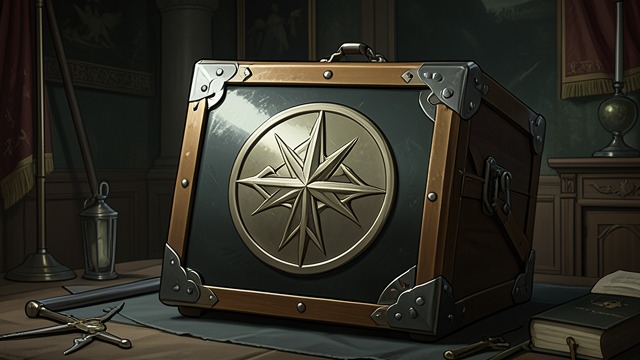
A Symbol of Completeness
Five Interlocking Points
The pentangle signifies a complex union of virtues and has no broken line. Its design makes perfection appear continuous and stable.
A Knight Embodied
Gawain wears the sign as a statement of his moral identity.
The Shield on the Road
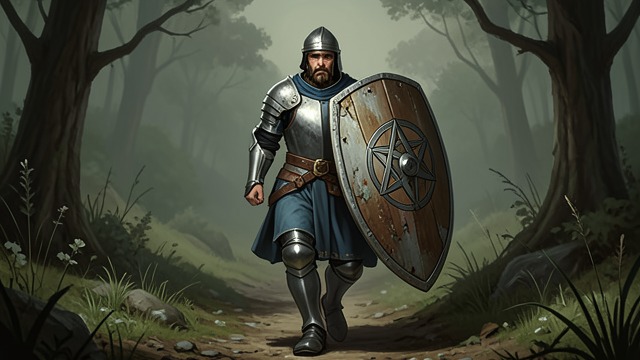
The Shield on the Road
Virtue Carried Outward
Gawain travels with the pentangle shield, taking Camelot’s ideal into the wilderness. The emblem accompanies physical vulnerability.
Symbol Meets Experience
The journey asks whether the design can hold under conditions no courtly ceremony controls.
The Hidden Girdle
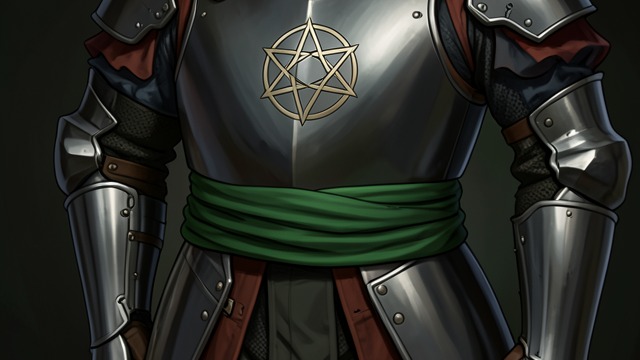
The Hidden Girdle
An Imperfect Choice
Gawain takes a protective token and conceals it. The act breaks the seamless image of complete fidelity.
The Body Beneath the Emblem
His fear reveals that a symbol of virtue cannot remove human dependence on survival.
The Wounded Pattern
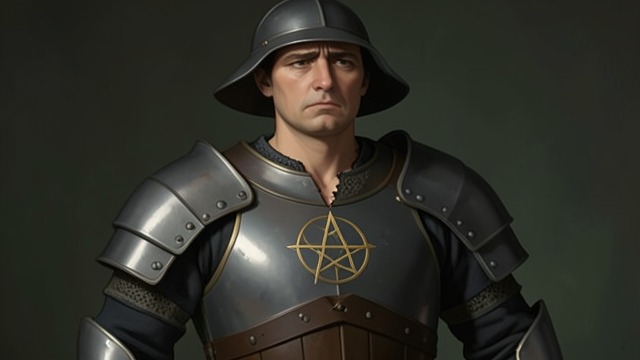
The Wounded Pattern
A Mark of Failure
The cut on Gawain’s neck and his confession unsettle the image of the unbroken pentangle. He sees a flaw where the symbol promised continuity.
Meaning Changes
The ideal remains valuable, but it no longer describes him without qualification.
Virtue After the Test
Virtue After the Test
A Shared Sign
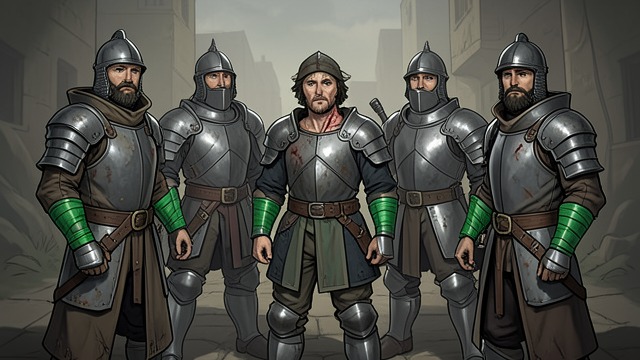
The green band joins the court around Gawain’s experience, adding communal memory to the ideal of virtue.
Perfection Replaced
The pentangle’s aspiration remains, but lived chivalry now includes fallibility and truthful self-knowledge.
During Gawain’s preparation at Camelot
At the start of Gawain’s journey
The third day at Hautdesert
After the third axe swing
At Camelot near the ending
